The Sweet Irony of History: When the Baghdadi Dynasty Met (Again) the Queen of England — From Victoria to Elizabeth II
Behind Carmel Shabi's work as a Judaica artist lies a story of ancient heritage, technical mastery, and a fascinating encounter between worlds, East and West. There is something amusing and almost fitting in the fact that someone who grew up in the lap of an ancient Baghdadi aristocracy would find himself, years later, refining his craft in a silversmith workshop entrusted with creating pieces for the British Royal Family.
Deep Roots in Baghdad
My father was born in 1939 to the Shabi family, a long-established family in Baghdad (as is well known, all Jews who lived in modern-day Iraq arrived in the region with the destruction of the First Temple). My father was the fourth of seven children born to Avraham and Lulu (née Fatal). My grandmother's family was among the wealthiest in Baghdad, belonging to a select group of families—such as the Sassoon family ("The Rothschilds of the East," the ancient Sassoon dynasty shifted its base of operations from Baghdad to British India and the UK itself). During the Crimean War, my grandmother's family, along with other prominent Jewish families, provided significant financial backing to the British war effort. Thus, across all its branches, my father was born into a very affluent family, due in part to my grandfather's profession as an engineer and land surveyor.
The Turning Point, the Transit Camp, and Hope
The family's Baghdadi aristocracy completely lost its fortune when my father's eldest brother was abducted and thrown into an Iraqi prison. To save his life, the family was forced to bribe corrupt police officials and, soon after, flee the country to make Aliyah to Israel, the newly established state. This took place as part of Operation Ezra and Nehemiah in 1951. In Israel, they were housed in a transit camp (Ma'avara) and initially endured poverty and hardship—and only thanks to my grandfather's sought-after profession were they able to pick themselves up and gradually rebuild their lives. It was here that my father's youngest sister was born, given the symbolically meaningful name: Tikva (Hope).
From the Air Force to London
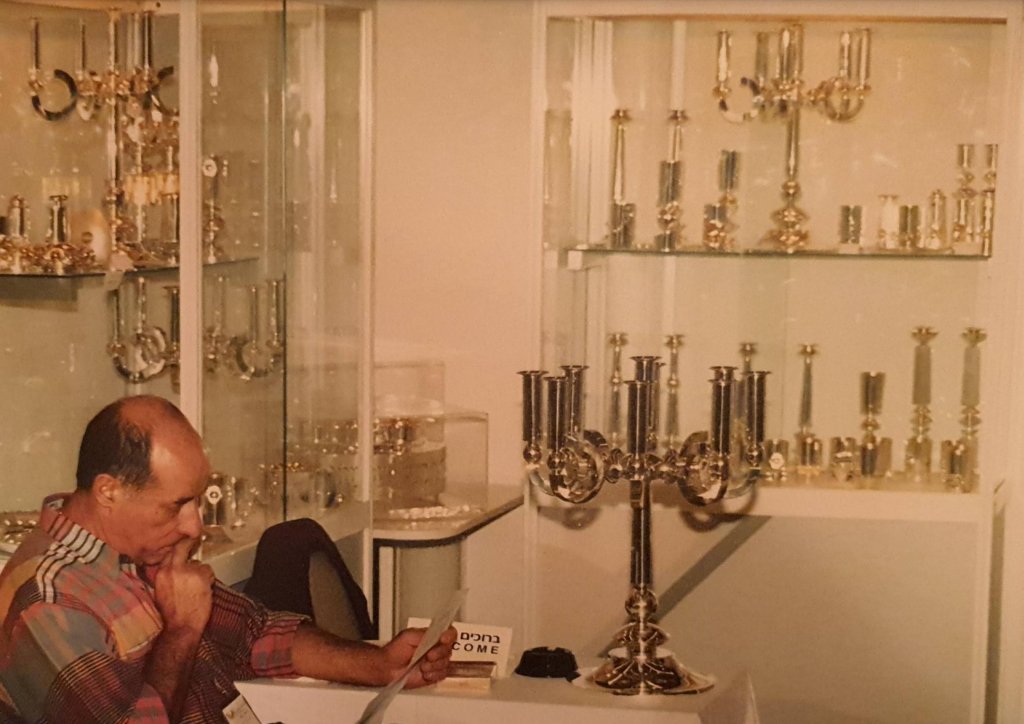
In previous posts, I shared the story of my father's meaningful military service in the Israeli Air Force as an aircraft mechanic, which developed his awareness of his technical talents. After exploring various art forms such as painting and mosaics, he found his true calling in silversmithing. In 1974, at the age of 35, he was awarded a scholarship and traveled to England. In London, he trained at the renowned workshop Wakely and Wheeler, founded in 1791 and famous for creating silversmithing works for the British Royal Family.
The Royal Stamp: The Ascot Trophy
Despite his formal status as an apprentice, Carmel was entrusted with executing advanced creations on behalf of the workshop. Chief among these was the trophy presented by the British Royal Family to the winners of Ascot, the annual horse race that serves as a hallmark status symbol of the aristocracy. The Ascot Trophy is crafted anew each year in a magnificent, traditional, and regal design, typically by Crown Jewellers such as the House of Garrard. The workshop where Carmel trained supplied these creations for Garrard—a prestigious brand that operated workshops of its own—making my father, in a sense, the "shadow silversmith" behind the Ascot Trophy... No small feat for someone who did not yet hold official union status in the UK, a country defined by its strict trade unions.
Historical Credit and the Artisan's Hand
I view this as a symbolic full circle—my father and our family may never have received their fair share of credit for the financial support they provided to the British Crown during the Crimean War in the mid-19th century, but he nonetheless crossed paths with British nobility. Furthermore, the fact that he was not a union member at the time allowed the workshop mentoring him to continue producing the trophies even through the turbulent years of British labor strikes. Beyond the symbolism, he was truly one of a kind—someone who, after just a few months of apprenticeship in the workshop and with no additional formal training, single-handedly crafted the trophy presented by the Queen to the winners of the aristocratic horse race.

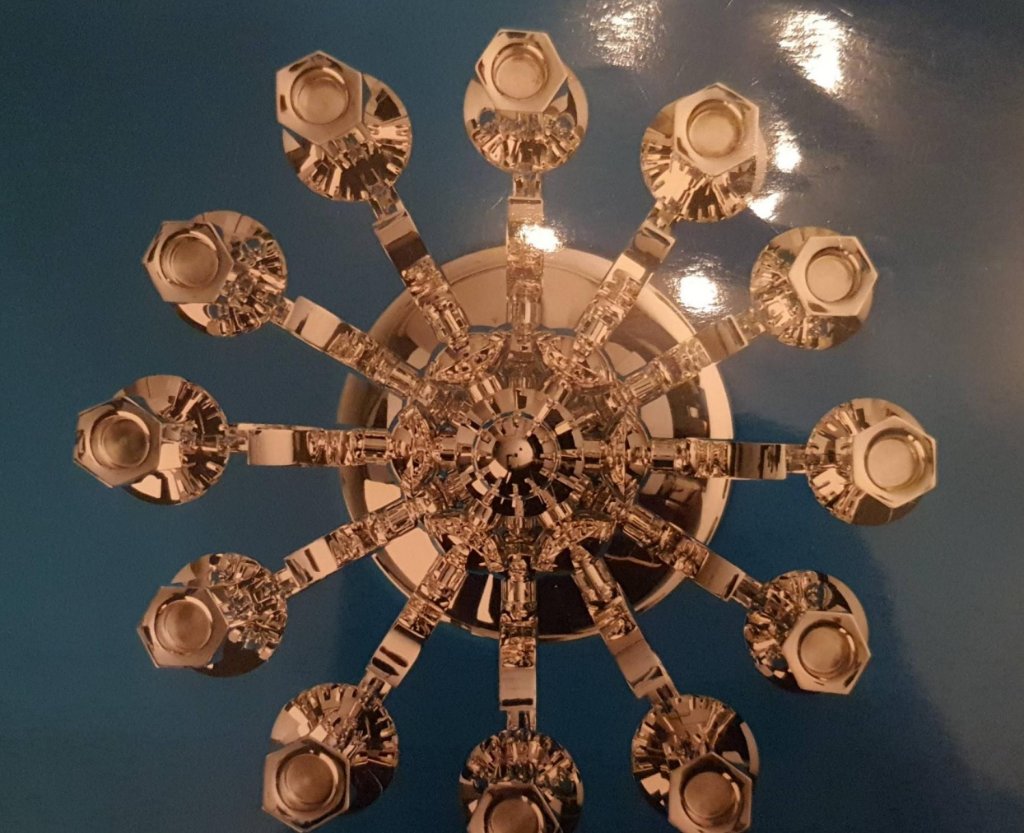
Pictured here is a Torah crown crafted by Carmel — and this is the crown of the true Queen. Every part of the Torah scrolls was always one of a kind. This piece is made of sterling silver, with gold-plated elements. Diameter: 30 cm, Height: 28 cm.

If you would like to see a brief, fascinating video about silver techniques, this is the website of Garrard, the house that commissioned the creation executed by Carmel — where one may witness the artistry and processes behind its trophies. Photographs of the Ascot trophies themselves are not publicly available; they remain, in perpetuity, the property of the winners.
Stories & Updates
Newsletter
A Craft That Continues to Illuminate Hearts
Join our monthly newsletter and receive in-depth stories, behind-the-scenes sketches, and exclusive glimpses into the archive of Carmel Shabi's works.
Memories & Reflections
Share a Memory of Carmel
Related Stories